Legal Basement Suites
*
Legal Basement Suites *
Mastering the Code: Electrical Requirements for Legal Basement Suites (CEC 2024 & Alberta STANDATA)
Are you planning to turn your basement into a legal rental or an in-law suite? In Alberta, the transition from "basement development" to "legal secondary suite" changes everything—especially the electrical requirements.
As a Master Electrician, I see many homeowners get caught off guard by the strict regulations in the 2024 Canadian Electrical Code (CEC) and the latest Alberta STANDATA interpretations. Here is the full scoop on what you need to know to pass your inspection the first time.
-
Before we pull a single wire, the CEC Rule 8-200 requires a mandatory Load Calculation. Adding a second kitchen (stove, microwave, dishwasher) and laundry significantly increases the demand on your electrical system.
The Check: We calculate the total wattage of your existing home plus the new suite.
The Result: If the total exceeds your current service (usually 100-amp), you may require a Service Upgrade to 200-amp or the installation of an EVEMS (Energy Management System) to manage the load legally.
STANDATA Note: Alberta authorities require this calculation sheet to be submitted with your permit application.
-
This is the most critical safety requirement. Smoke and Carbon Monoxide (CO) alarms must be hard-wired and interconnected between the main dwelling and the secondary suite.
The Rule: If a toaster starts a fire in the basement kitchen, the alarms must sound in the upstairs master bedroom simultaneously.
Power Source: These must be on a circuit with a mix of lighting and receptacles so that if the circuit trips, it's immediately noticed (Alberta STANDATA 24-ECB-032).
-
The CEC 2024 is very strict about Arc-Fault Circuit Interrupter (AFCI) protection. Almost all outlets in a legal suite (living rooms, bedrooms, hallways) must be protected by AFCI breakers.
Why? AFCI breakers detect dangerous sparking (arcs) caused by damaged cords or loose wiring, preventing fires before they start.
-
A legal suite is defined by its cooking facilities. The electrical code requires specific power for those appliances:
Dedicated 20A Circuits: You must have at least two 20A branch circuits for kitchen countertop receptacles.
The "Small Appliance" Rule: Separate circuits are mandatory for the refrigerator, stove/oven, and microwave to prevent nuisance tripping when multiple appliances are running.
-
Homeowners often want to hide electrical panels in closets or bathrooms. This is illegal. * The Rule: The electrical panel must be in a well-lit, accessible area with at least 1 meter of clear working space in front of it. It cannot be located in a bedroom, bathroom, or any room where it could be easily blocked.
-
In many Alberta municipalities (like Chestermere and Calgary), a homeowner can pull their own permit for a standard basement, but only a Master Electrician can pull the permit for a Legal Secondary Suite.
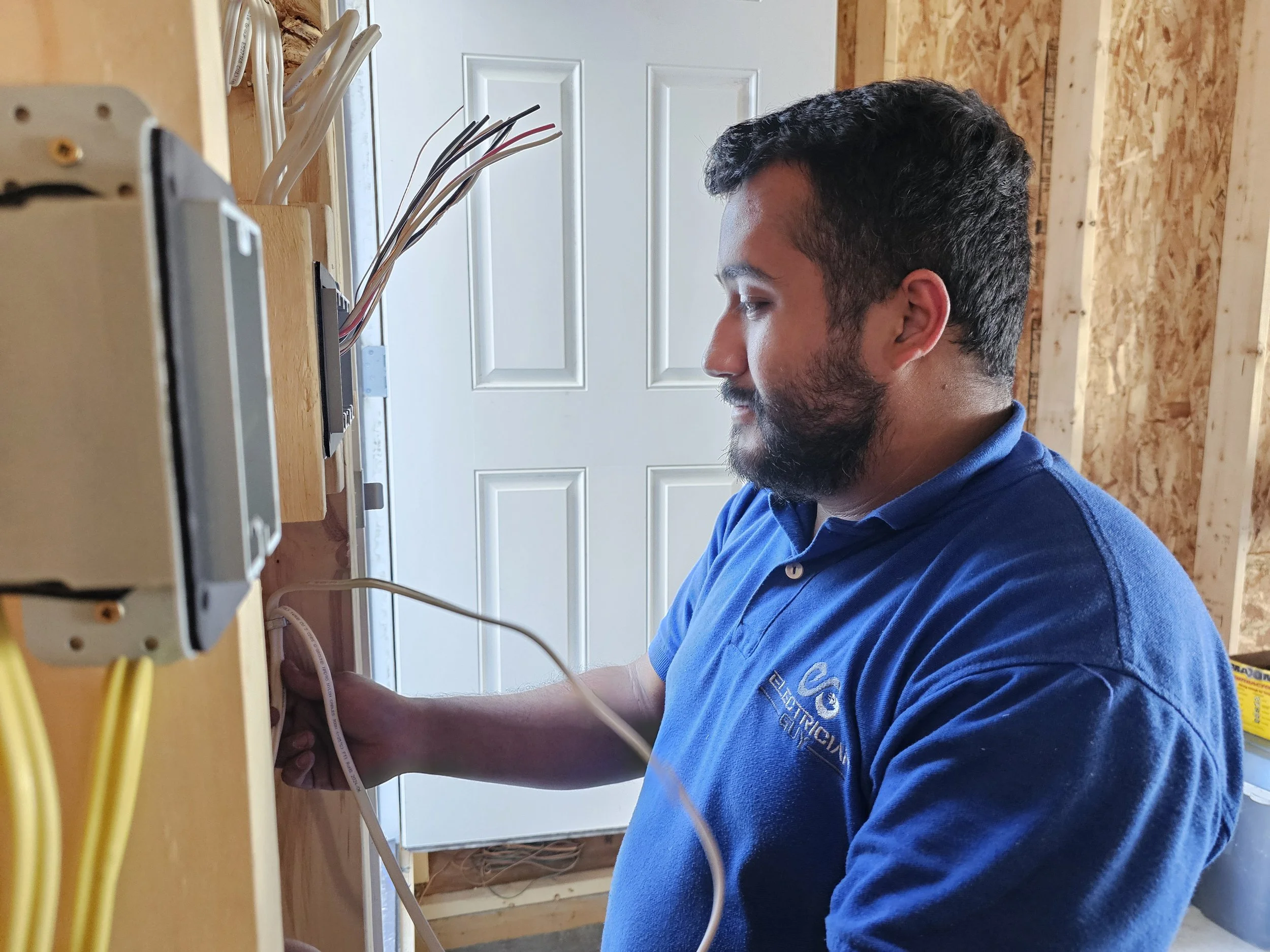
My background as a military radar technician ensures that we don’t just "meet" code—we apply military-grade precision to every connection. We handle the load calculations, the City inspections, and the Enmax coordination so your investment is protected and your tenants are safe.
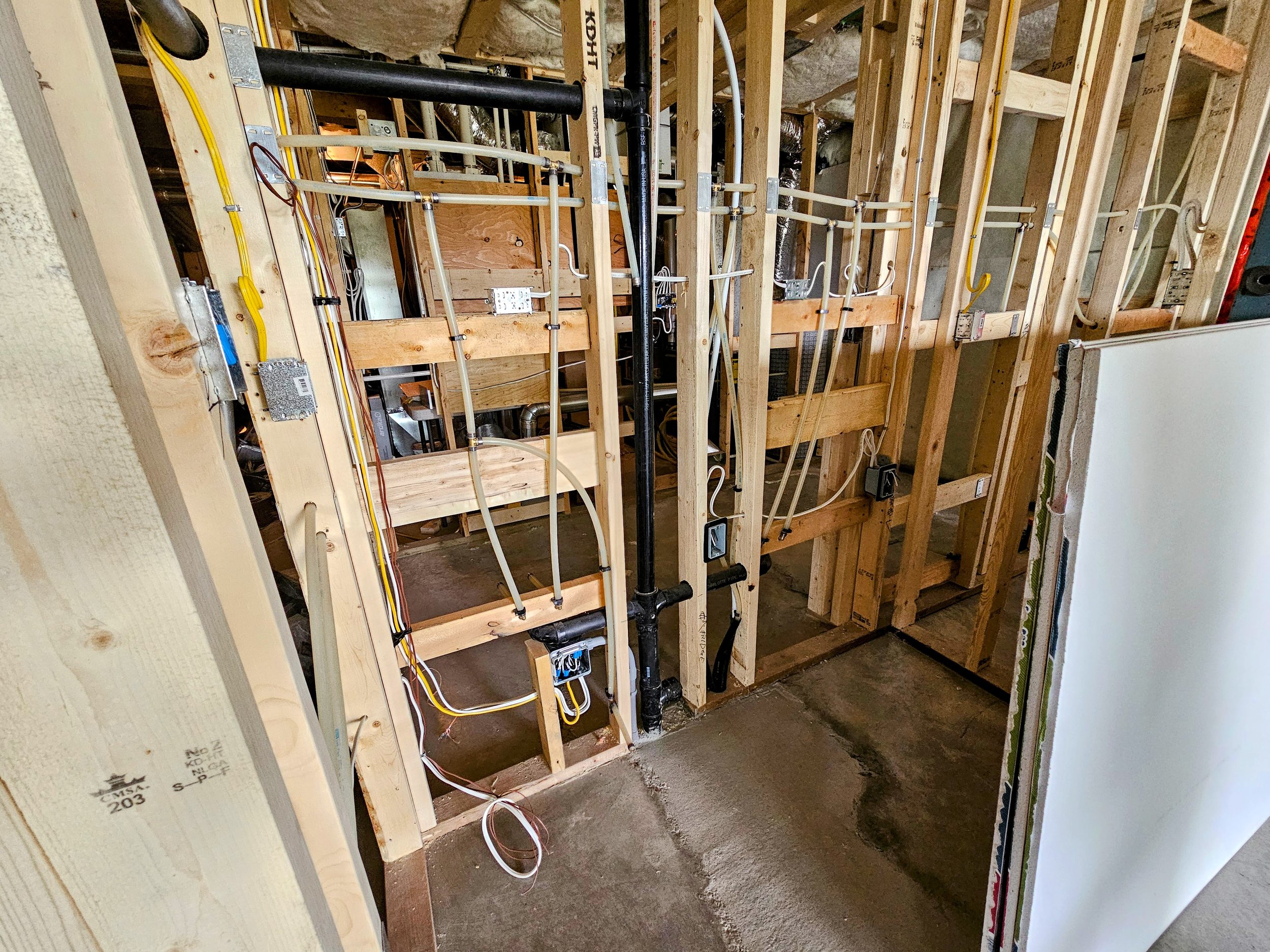
We ensure your project meets all Alberta Safety Codes and the 2024 Canadian Electrical Code (CEC).